Get a Free Quote

Anbolife Team will reply you in 24 hours.
Your Name
Email
Message
0/1000
Select All Products That You Need Details And Prices
Home / Resources / Insights / Visual Viewing Windows in Air Fryers: Glass Explosive Safety & Heat Retention Trade-offs

Visual Viewing Windows in Air Fryers: Glass Explosive Safety & Heat Retention Trade-offs

October 15, 2026

Air fryer visual window design enhances user engagement but introduces trade-offs in thermal efficiency and structural safety. Single-pane windows risk heat leakage and thermal shock cracking, whereas engineered double-layer tempered glass baskets ensure explosion safety, optimize heat retention, and prevent outer housing overheating.
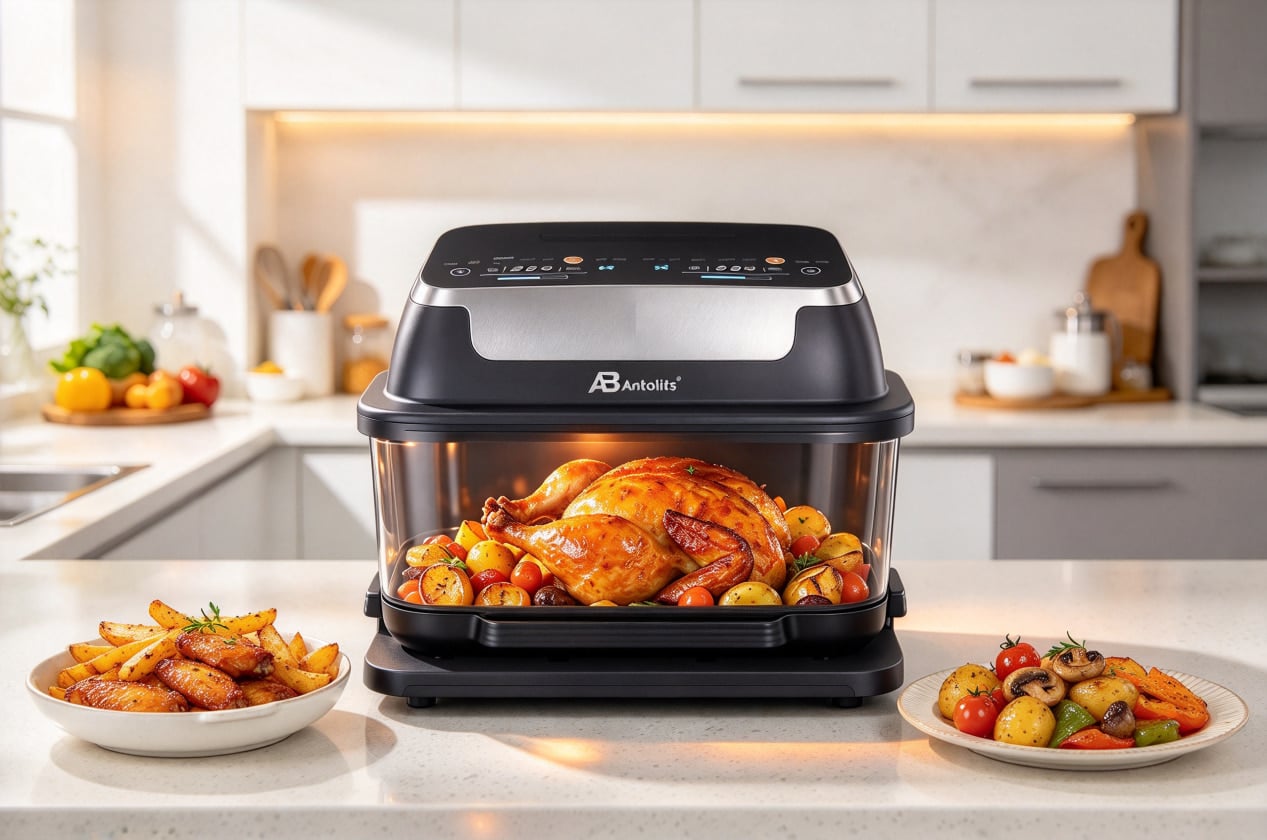
The Market Appeal and Engineering Challenges of Visual Viewing Windows

  • Integrating transparent viewing panels into electric fryers has transformed retail display dynamics and consumer satisfaction metrics across global markets.

image (30).jpg

1. Consumer Demand: Why Visual Windows Drive Higher Conversion

The consumer appetite for intuitive cooking control has made the air fryer visual window design a dominant sales driver on major e-commerce platforms like Amazon and in physical retail chains.

Process Transparency: End-users prefer monitoring the Maillard reaction (browning) without interrupting the convection cycle by opening the basket.

Perceived Product Value: Appliances featuring tempered glass windows command a premium price point, yielding higher margins for importers and brand OEM partners.

Higher Conversion Rates: Retail category managers report significantly reduced return rates when consumers can monitor cooking progress visually rather than relying purely on digital timers.

2. Thermal Dissipation and Energy Loss: The Heat Leakage Trade-off

While transparent panels elevate aesthetic appeal, replacing insulated plastic or stainless-steel walls with glass introduces thermodynamic challenges.

  • Radiative Heat Loss: Glass possesses a higher thermal conductivity coefficient than air-jacketed polymer walls, accelerating radiant energy dissipation.
  • Performance Degradation: Uninsulated viewing panels cause a heat leakage air fryer effect, resulting in temperature drops of 10°C to 15°C inside the cooking cavity.
  • Extended Cooking Cycles: To compensate for thermal retention loss, heating elements must run longer, increasing overall energy consumption and component wear.

Glass Explosive Risks vs. Double-Layer Glass Protection: Engineering Breakdown

For B2B buyers and QA specialists, choosing between single-pane and double-layer window architectures directly impacts product safety compliance, warranty costs, and brand reputation.

Engineering Metric

Single-Pane Tempered Glass

Double-Layer Sealed Glass

B2B Compliance & Buyer Impact

Material & Spec

Single 3mm - 4mm tempered glass

Double-layer glass safety with air gap

Double-layer meets strict European GS / UL touch safety standards

Thermal Shock Resistance

Moderate (risk of thermal fracture above 200°C shock)

Superior thermal barrier; outer pane remains cool

Eliminates explosive shattering caused by cold water splashing

Heat Leakage Rate

High thermal loss through radiation

Low (trapped air layer acts as insulator)

Prevents heat leakage air fryer performance degradation

Touch Safety / Outer Temp

High outer window temperature (80°C)

Cool-touch outer window (<50°C)

Minimizes burn hazard complaints and Amazon negative reviews

Manufacturing Cost

Low tooling and assembly cost

Mid-to-High (requires specialized silicone sealing)

Higher profit margin and lower warranty return rate

image (31).jpg

1. Understanding Thermal Shock Fracture in Tempered Glass Baskets

Importers sourcing a low-cost tempered glass basket air fryer frequently encounter high defect rates during post-sales thermal shock testing.

  • Thermal Shock Physics: When cold water or wet food splatters onto a single-pane glass surface heated to 200°C, extreme localized temperature differentials induce tensile stress.
  • Spontaneous Shattering: Micro-imperfections in low-grade soda-lime glass expand rapidly under thermal stress, triggering sudden glass explosions during active cooking cycles.
  • Structural Fatigue: Repetitive expansion and contraction cycles degrade structural integrity, increasing long-term safety recall risks for retail brands.

2. How Double-Layer Glass Safety Eliminates Burn and Explosion Hazards

Engineered OEM manufacturers address thermal hazards by implementing a robust double-layer glass safety architecture.
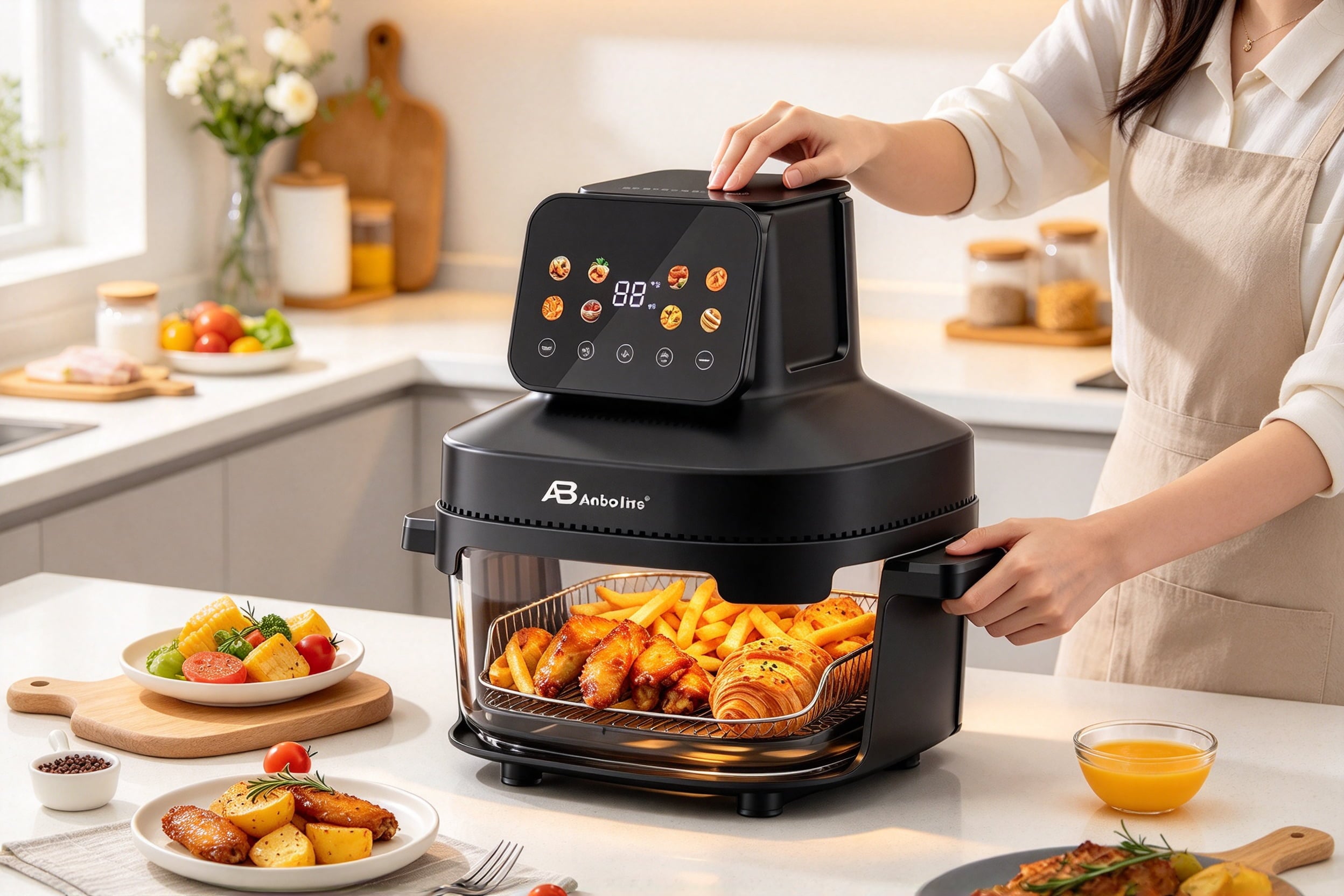
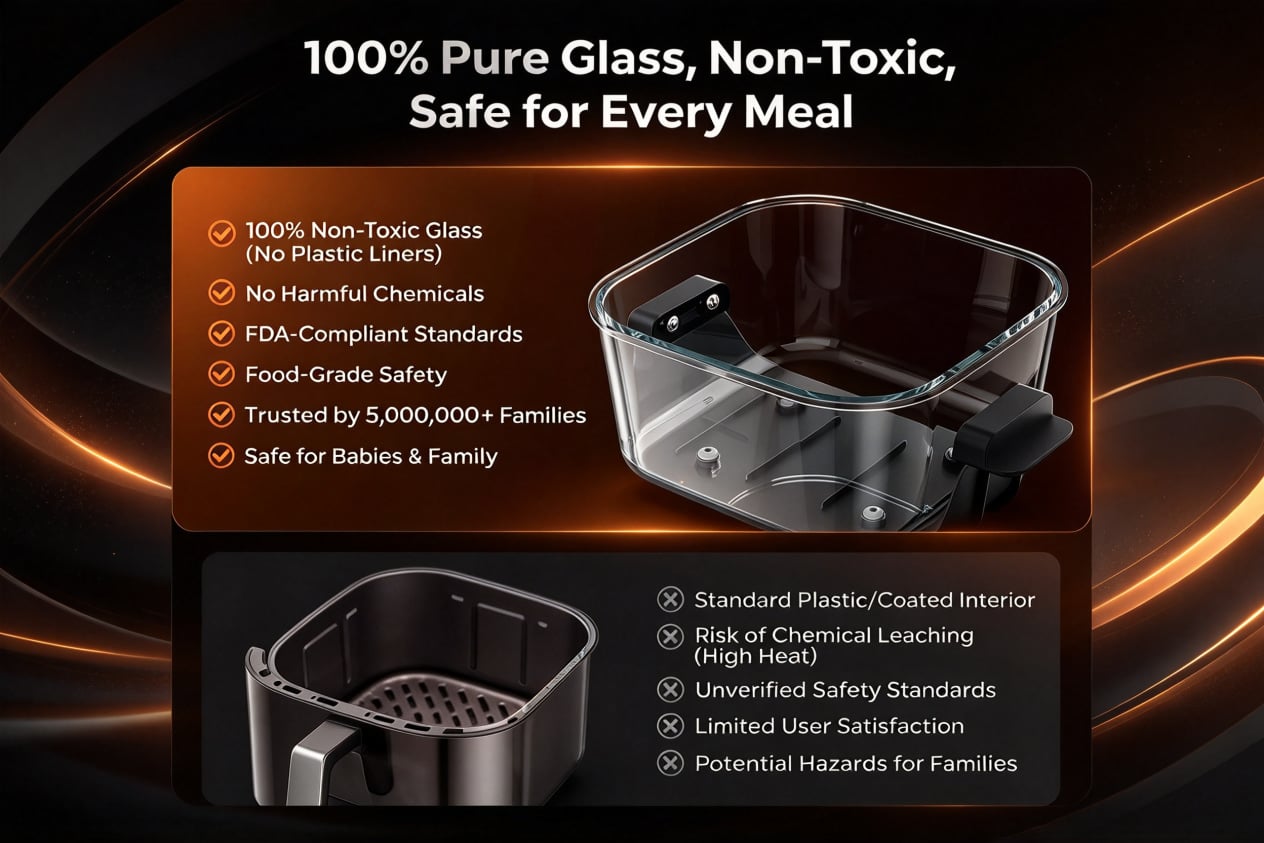
  • Dual-Pane Isolation: An inner high-borosilicate glass pane absorbs direct radiant heat from the element, while an outer tempered glass panel remains isolated.
  • Insulating Air Barrier: A sealed air cavity between the glass panes creates a thermal break, dramatically reducing conductive and convective energy loss.
  • Cool-Touch Safety: The outer pane temperature stays below 50°C (cool touch air fryer window), ensuring full compliance with European GS and North American UL surface temperature limits.

image (32).jpg

Manufacturing Best Practices: Sealing, Airflow, and Quality Control

Maintaining long-term clarity and thermal performance requires advanced factory assembly techniques and strict quality control protocols.

1. High-Temperature Food-Grade Silicone Sealing Techniques

Inferior window construction allows grease vapor and moisture to migrate into the internal cavity, obscuring visibility over time.

  • Precision Gasket Injection: Automated dispensers apply food-grade, FDA/LFGB-certified silicone gaskets rated for continuous exposure to 250°C.
  • Hermetic Cavity Sealing: The silicone seal forms a permanent barrier around the perimeter of the double-layer assembly, blocking steam, oil mist, and cleaning chemicals.
  • Zero Off-Gassing: High-grade silicone formulation prevents chemical off-gassing, ensuring complete compliance with REACH and RoHS standards.

2. Compensating for Window Heat Loss with Optimized Fan and Heater Wattage

Professional appliance factories tune internal aerodynamics to offset the natural thermal conductivity of glass viewing panels.

  • CFD Airflow Optimization: Computational Fluid Dynamics (CFD) modeling guides the design of internal air ducts to maintain uniform 360° hot air velocity around the glass window.
  • Dynamic Power Distribution: Calibrated NTC sensors and PCB controllers adjust heating tube wattage dynamically to compensate for minor heat radiation through the panel.
  • Even Heat Distribution: Balanced airflow guarantees consistent Maillard reaction results without creating cold zones near the front viewing panel.

Strategic Sourcing Checklist for Importers Offering Visual Window Models

To protect your brand reputation and pass stringent customs inspections in European and North American markets, enforce these quality assurance benchmarks during factory audits:

  • Verify Borosilicate / Tempered Specs: Require certified test reports confirming the use of high-borosilicate or heat-strengthened glass.
  • Audit Thermal Shock Test Logs: Ensure the factory subjects glass baskets to cold-water splash tests at maximum operating temperature (200°C+).
  • Inspect Double-Layer Seal Integrity: Confirm automated silicone gasket application line and IPX-level leak testing procedures.
  • Review Surface Temperature Compliance: Check third-party test data verifying the outer glass window temperature remains within UL / GS cool-touch thresholds.
  • Validate Factory Certifications: Verify that the manufacturing facility holds active ISO9001 and BSCI accreditations.

To explore market-ready appliances that balance aesthetic consumer appeal with strict explosion-proof engineering, review our certified custom visual window air fryer OEM options and thermal testing before placing your next volume order.

Frequently Asked Questions (FAQ)

Q1: Is a tempered glass basket air fryer safe for daily high-temperature cooking?

Yes, provided it uses high-grade borosilicate or heat-strengthened tempered glass manufactured to international safety standards. To eliminate thermal shock shattering, premium manufacturers utilize a double-layer glass structure that distributes heat evenly and protects the outer pane from rapid temperature drops.

Q2: Does adding a visual viewing window increase energy consumption in air fryers?

Single-pane glass windows can increase heat loss by 10% to 15%, requiring higher wattage or longer cooking times. However, advanced air fryers engineered with double-layer insulated glass and optimized internal airflow maintain thermal efficiency comparable to traditional solid-wall units.

Q3: How do OEM factories prevent grease and condensation from accumulating inside double-layer glass windows?

Reliable manufacturers implement high-precision, automated food-grade silicone sealing gaskets around the frame perimeter. This seals the insulating air gap between the two glass panes, completely blocking grease vapors, moisture condensation, and food particles from entering the cavity.

Source Explosion-Safe, High-Thermal-Efficiency Visual Air Fryers

Upgrade Your Product Line with Certified Cool-Touch Visual Air Fryers.

Eliminate recall risks and customer return complaints with our double-layer tempered glass air fryers. Designed with precision thermal insulation, zero grease-leakage sealing, and fully certified under UL, CE, and ETL safety standards.

📩 [Contact Our Product Engineering Team Today] to request certified thermal shock test reports, and to explore flexible low-MOQ (starting at 50 units) custom options!

Recommended News

Let's Talk Solutions.
Ready to upgrade your home appliances

Let's Talk Solutions.

Eliminate energy waste and daily hassles. Contact us today for a free, custom efficiency check tailored to your home.
Let's Talk Solutions.
phone icon
8615355165639
wechat qr
whatsapp qr

Get a Free Quote

Anbolife Team will reply you in 24 hours.
Your Name
Email
Message
0/1000
Select All Products That You Need Details And Prices
icon_pic3

Get a Free Quote

Anbolife Team will reply you in 24 hours.
Your Name
Email
Message
0/1000
Select All Products That You Need Details And Prices